
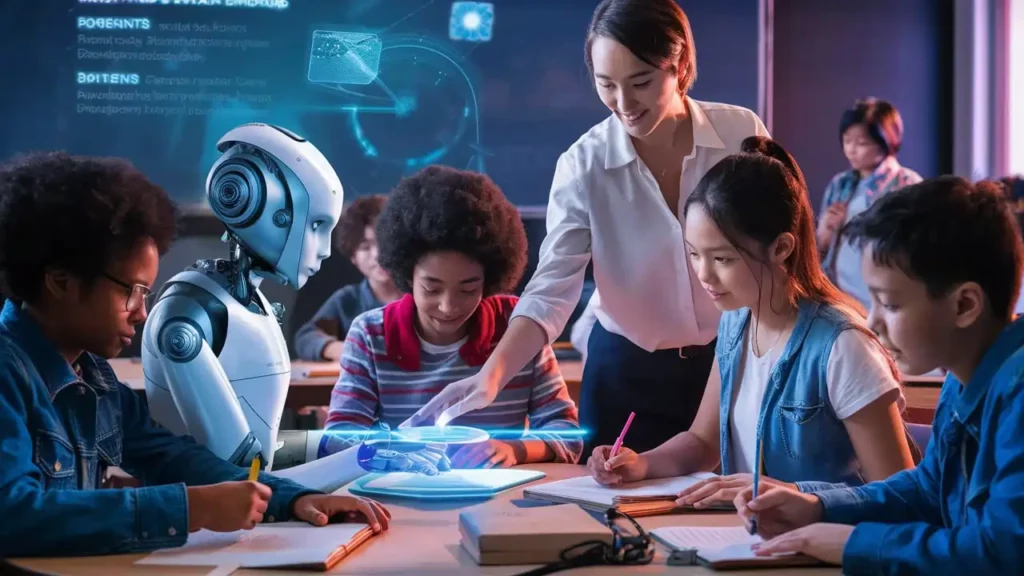
AI is revolutionizing how teachers plan classes and monitor how well their students are progressing in school. Thanks to smart technologies that consider curriculum demands and student needs, planning classes now takes less than an hour, while instructors use these tools to personalise learning while still meeting curriculum aims. AI-powered tools also aid instructors make lessons more personalised while still meeting curriculum aims; when people discuss digital identity in education communities they often refer to student preferences becoming part of today’s digital learning culture by using terms like Hidden Face DPs as evidence that this change has taken place.
Personalizing Lesson Planning To Optimize Teaching Performance
One of the advantages of AI for lesson design is how it may personalize learning routes more individually. AI-powered systems analyze student data, identify areas for improvement, and suggest resources to assist each learner’s personal development – helping instructors move away from using one size-fits-all lessons towards personalized ones that focus on each learner individually. Teachers also benefit from automatic material suggestions which save them time while making lessons better; even when kids use motivating phrases such as “attitude jalne walo ke liye shayari in English” when creative writing creatively, AI may help instructors direct them toward positive learning outcomes that could otherwise.
Streamlining Classroom Workflows For Educators
AI technologies offer powerful assistance when it comes to making timetables, lesson plans and finding curriculum standards quickly. This reduces paperwork for teachers so that they can spend their time having meaningful interactions with their students instead. Smart platforms enable teachers to quickly generate quizzes, workbooks and reading lists within minutes while larger school administration tools that let teachers post “” ads are becoming increasingly common as digital systems continue to play an integral part in education processes.
Data-Driven Evaluation To Gain Insights
AI can make evaluation easier as it uses data to provide instantaneous feedback and in-depth performance statistics, giving teachers insights into pupils’ comprehension levels as well as areas they must work on. Teachers also may spend less time marking papers when automated grading for objective questions is used versus marking papers, with adaptive tests dynamically changing to suit learners with different understanding levels – this feature has been touted by numerous edtech entrepreneurs on StartupBeat who discuss adaptive testing as making assessment fairer and more accurate.
Help For Different Learning Needs
AI can be an invaluable asset to students with specific learning needs as it offers numerous ways to aid in their studies. Text-to-speech, personalized reading aid and predictive alerts allow instructors to know when children require further assistance – these features benefit both those doing well already as well as those needing extra aid – providing fast responses with tailored interventions designed specifically for each pupil based on engagement levels and performance trends.
Improved Communication And Feedback Processes
AI programs may offer pupils useful feedback that helps them determine where their strengths lie and which areas need improving, with automated summaries of performance patterns making instructors’ communications with parents and school administration clearer; chat-based systems providing academic help when students require it thereby building up confidence and drive in students; these technologies make communication faster, clearer and more meaningful than ever!
Unable To Meet Future Demand In Education Systems
AI is revolutionizing how teachers organize lessons and grade pupils, while simultaneously equipping children for a future where computers will play an increasingly pivotal role. Teachers may use AI technologies during lessons to show children how smart systems impact daily life and provide job opportunities they might otherwise miss out on. AI not only makes teaching more efficient but it helps develop students with curious minds who embrace flexible attitudes as well.
Conclusion
AI is rapidly revolutionizing education systems around the globe by streamlining planning processes, offering personalized tests, and helping make decisions based on facts. As these technologies advance further, teachers now have more chances to create classroom environments that are enjoyable, interesting and welcoming – not to mention less stressful – for all their students. AI could make education systems more sensitive to each student’s individual needs while lightening teachers’ workload and helping children gain insight from all parts of society.









+ There are no comments
Add yours