
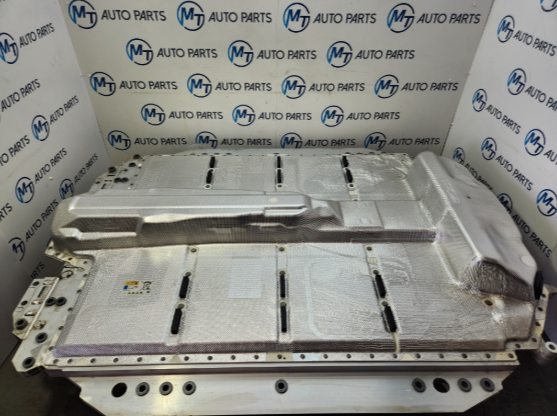
Something is quietly changing in the market for used BMW electronic parts, and most BMW owners haven’t noticed it yet. The brand’s rapid expansion into electric and plug-in hybrid vehicles over the last four years is creating a new supply of genuine used components that simply did not exist before. Batteries, electric motors, inverters, charge controllers, and hybrid drive systems that were previously only available new from a dealer at high cost are starting to appear as genuine used parts, and the volume is only going in one direction — up.
If you own a plug-in hybrid BMW, or you’re considering buying one, this is worth understanding. The used market for BMW electronic parts is in its early stages. Getting in ahead of it can make a meaningful difference to what you pay when something eventually needs replacing.
How Big Is BMW’s Electric Fleet in the UK?
Larger than most people realise. In 2024, 125,265 electric BMWs were registered in the UK, a 12 per cent increase on the previous year. That figure makes BMW one of the most widely adopted electric vehicle brands in the country, and it comes on top of the significant number of plug-in hybrid BMWs, through models like the 330e, 530e, X1 30e, X3 30e, X5 45e, and 225xe.
The i4 alone recorded 12,953 UK registrations in 2024, up 45 per cent year on year. The iX3, the X1 as an iX1, and the wider hybrid range have all contributed to a growing fleet of BMWs where the electrical system, specifically the high-voltage battery and drive system, is a central component rather than an auxiliary one.
What this means in practice is straightforward. More electric and hybrid BMWs on UK roads means more electric and hybrid BMWs eventually sustaining damage, reaching end-of-life, or requiring component replacement. Each one that enters the recycling supply chain through an ATF-permitted breakers yard generates a set of genuine used BMW electronic parts that would otherwise only be available new.
The Part That’s Getting BMW Owners’ Attention: The Battery
BMW hybrid battery replacement is one of the most searched topics among plug-in hybrid BMW owners in the UK, and for understandable reasons. BMW hybrid battery replacement costs from a dealer currently range from £2,000 to £15,000 depending on the model, with larger vehicles like the X5 45e carrying higher costs than compact plug-ins like the 225xe. These are significant numbers, particularly for cars that are out of the manufacturer’s eight-year battery warranty.
The battery warranty position is worth understanding. BMW covers its high-voltage batteries for eight years or 100,000 miles in most markets, including the UK. For an i4 registered in 2022, that warranty runs to 2030. For a 330e registered in 2019, it ran to 2027. As those warranty periods expire, and as early EV and PHEV examples sustain accident damage that results in insurance write-offs, the supply of genuine used BMW battery units is building.
What BMW’s high-voltage battery warranty covers: BMW’s 8-year/100,000-mile high-voltage battery warranty covers defects in materials and workmanship, and capacity falling below 70% of original rated capacity. It does not cover damage from accidents, misuse, or failure to follow BMW’s charging guidelines. After the warranty expires, replacement is the owner’s cost, which is where the used parts market becomes relevant.
A genuine used BMW high-voltage battery from a documented low-mileage donor car, say, an i4 written off in a front-end collision at 18,000 miles, is a fundamentally different purchase from one with unknown provenance. The battery has covered 18,000 miles. Its state of health can be read via BMW diagnostic software. Its remaining capacity can be confirmed before purchase. In contrast to a new dealer battery, the cost difference can be substantial, and the performance difference, on a battery that has covered comparatively little mileage, is negligible.
Electric Motors, Inverters, and Drive Units
The battery gets most of the attention when people talk about EV running costs, but it is not the only BMW electronic part where the used market is beginning to offer real alternatives to new dealer pricing.
The electric motor in an iX3 is a single rear-mounted unit producing 286 horsepower. In the iX1 xDrive30, two motors combine to produce 313 horsepower. In the i4 M50, the dual-motor setup produces 544 horsepower. These motors are engineering components with long service lives under normal use; they do not wear in the way that combustion engine components wear, because they have no internal combustion, no pistons, no timing chain. What ends their service life on a donor car is almost always external, accident damage, or the car reaching financial write-off status for bodywork-related reasons.
An electric drive motor from a written-off BMW iX3 with 22,000 miles on it has a remaining service life that, absent any specific fault, is measured in hundreds of thousands of miles. It is the same motor BMW installed at the factory. The electronics that control it, the inverter that converts DC battery current to AC for the motor, are similarly long-lived components when not physically damaged.
For an independent BMW specialist looking to repair an iX3, i4, or iX1 with a failed drive unit, the arrival of genuine used motors and inverters in the specialist parts market is a significant development. A new drive unit from a dealer is a five-figure cost on some models. A documented low-mileage genuine used unit with a warranty changes the viability of the repair entirely.
An electric motor from a written-off BMW with 22,000 miles has the same engineering integrity as the day it left the factory. What ended its time in that car had nothing to do with the motor.
Plug-In Hybrid Components — The 330e, X3 30e, and X5 45e
For many BMW owners, the most immediately relevant part of this development is not the fully electric models but the plug-in hybrid range. The 330e has been on sale in the UK since 2019. The X3 30e, the 530e, and the X5 45e have significant numbers on UK roads. The 225xe has been available for several years. They are mature models with an established ownership base, and the earliest examples are now well outside their original warranty periods.
The plug-in hybrid high-voltage battery in a 330e is a different unit from the full EV battery in an i4, smaller in capacity, designed for blended combustion and electric operation rather than pure EV driving. But it is still an expensive component to replace new, and the supply of documented used units from accident-damaged 330e and X3 30e cars is now meaningful enough that a specialist breakers yard can realistically stock them.
The hybrid drive module, the unit that integrates the electric motor with the ZF automatic gearbox in rear-wheel drive PHEV models, is another component where the used market is developing. In early PHEV BMWs, these systems are now accumulating real mileage, and the specialist knowledge required to remove, test, and list them accurately is concentrated in BMW operations rather than general breakers yards.
iDrive and BMW Electronic Modules — What’s Available
Beyond the high-voltage drivetrain components, the broader BMW electronics market is also changing as more recent models enter the breakers supply chain. The iDrive head units in G-series models, the parking control modules, the advanced driver assistance system control units, and the myriad chassis control modules that govern everything from adaptive suspension to xDrive torque distribution are increasingly available as genuine used parts from documented donor cars.
BMW electronic parts in this category have always existed in the used parts market, but the quality and documentation of what’s available has improved significantly as specialists used BMW parts suppliers have become more systematic about recording donor car software versions, mileage, and fault code status at removal. A used BMW iDrive head unit listed with confirmed software version and no stored fault codes from the donor car is a very different purchase from one listed without this information.
BMW electronic components: iDrive head units, parking sensor modules, chassis control units — require coding after fitting. Before buying any used BMW electronic part, confirm the correct part number for your specific car using your VIN, and factor the coding cost into the total. An independent BMW specialist with ISTA or equivalent software can carry this out
What This Means for BMW Owners Right Now
If you own a plug-in hybrid or fully electric BMW, a few things are worth knowing.
First, the used parts market for BMW electric and hybrid components is in its early development phase. That means supply is growing but not yet deep. For some components, early 225xe batteries, first-generation iX3 drive units, and documented used units are appearing, but availability is not yet consistent. For more recent models, the supply is still thin because the cars themselves are newer.
Second, the used parts market for BMW combustion engine components is well established and deep, particularly for F and G-generation models. If your hybrid BMW needs a combustion side repair (B47 diesel engine, B48 petrol engine, ZF gearbox), the used genuine parts market for those components is mature and well-stocked.
Third, as BMW continues its electric rollout and more models join the UK’s roads, the supply of used genuine BMW electronic parts and drive components will increase. The i4 registrations growing at 45 per cent year on year will translate directly into more i4 accident write-offs and more i4 drive components in the specialist breakers used parts supply chain over the next two to five years.
If you own a PHEV BMW approaching the end of its 8-year battery warranty, it is worth asking a BMW specialist to run a battery state-of-health check. This gives you the actual remaining capacity, not an estimate, and tells you whether the battery is genuinely approaching end-of-life or has significant service life remaining.





+ There are no comments
Add yours