
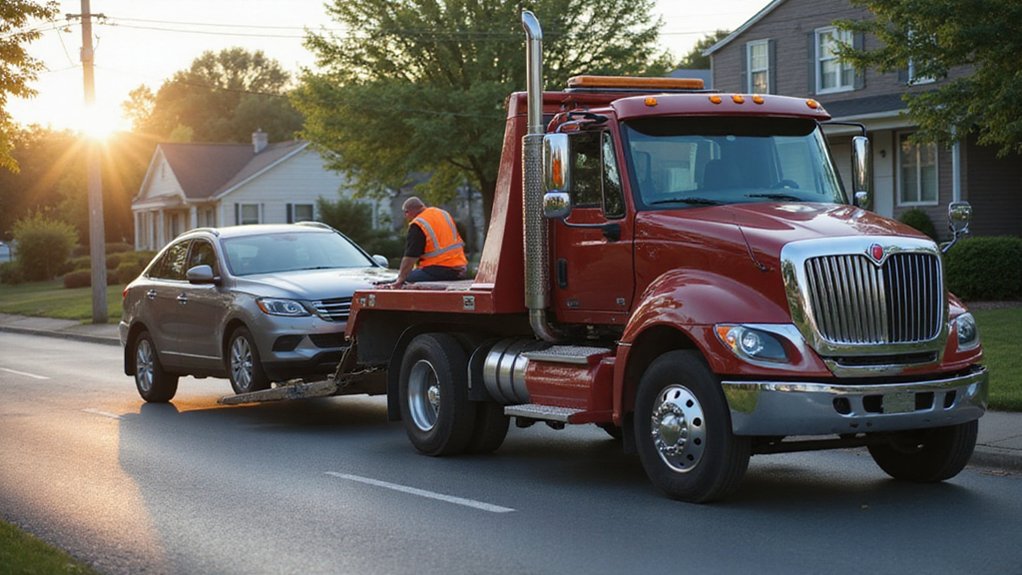
There’s a moment in every vehicle failure that compels someone to decide whether they’re going to sit there and take it, or get involved. Most often, the internal response is to save, to move, to try and get this vehicle where it needs to be without help. Sometimes this works. Sometimes it creates a minor incident into an expensive failure.
When is it okay to call for a tow without wasting time and money trying to fix a problem that remains unsolvable? Knowing when to call a tow saves costs, damages, and people. The price of getting a tow is far less than the excess damage done from someone trying to be a hero.
When The Car Can’t Start But It Also Doesn’t Move
A car that won’t start but will roll in neutral. A car that won’t start and won’t roll because the transmission is jammed, the brakes are engaged, etc. This is where people get in trouble.
Attempting to push or drag a car that has failed components jams the transmission, tears out the differential, busts wheel bearings. It happens with those pesky parking brake failures, blown transmissions, and frozen calipers. The vehicle literally will not roll, but people assume it should because that’s what’s “supposed” to happen. Instead they break something else that could have been saved, making a small- to medium-sized repair a large one.
Towing professionals who handle vehicles that won’t roll do not get caught up in the emotional response. They have dollies, flatbeds, and winches that help move vehicles regardless of their wheels moving or not. They know the best way to get the car up onto the flatbed without added damage. The operators from companies offering towing newcastle nsw know how to assess what’s wrong and their proper tools to avoid any additional incidents.
When The Car’s Been In An Accident Because It Looks “Not That Bad”
A car that has been in an accident presents itself as driveable—wheels turn, engines start up, nothing appears broken—but what people fail to realize is that an accident bent the frame, damaged suspension and broke steering components. Driving a car like this is far worse than getting towed home.
Driving on busted suspension without control makes for risky situations—and danger for all surrounding vehicles. Or signs of leaking fluids—coolants, oils, transmission fuel—indicate that driving will lead to failed systems as overheating overcompensates for failing components as transmission refuses to provide gears for necessary speed.
Insurance comes into play here too. If an insurance company discovers a person drove their car after an accident that shouldn’t have been driven, they’ll void the policy. Towing a vehicle to the assessor ensures proper claims are made before any additional accidents and damage occurs.
Stuck In Mud/Sand/Snow
Stuck vehicles in soft spots create scenarios where self-rescue only makes things worse. Spinning tires create craters for whatever wheels are stuck. Rocking back and forth overheats the transmission. Gunning it overheats the motor but works the drivetrain too.
People also get stuck worse because they keep trying. Once the front wheels are stuck in snow, instead of giving up, they dig themselves deeper when they drive forward and backward, further sinking the car’s body down to the axles. Now what’s easily recoverable is ten times more complicated—and expensive—all because someone didn’t know when enough was enough.
Tow operators have proper recovery equipment—winches, snatch straps, recovery boards—and they know how to get them out without any damage. They also have the weight of their vehicles as well as power behind them instead of running power from the stuck vehicle running out of steam.
When Warning Lights Mean Stop Not Go
Modern vehicles have warning lights for a reason. When check engine lights come on with reduced power, temperature dials hit red and oil pressure gauges turn on—this means stop driving.
But too often people put off temporary inconvenience for potential major disaster. They want to “make it home” or “make it to a garage,” but by doing this and ignoring their warning lights means blown engines due to overheating or loss of all transmittable gears due to liquid failure.
Once temperature breaks fail, there’s nowhere left to go; what starts off as an issue from a sensor becomes disaster denial which is often a one-way ticket to additional thousands worth of repairs. It’s worth checking out vehicles without assuming they have good intentions when trying to promote reduced costs.
Towing costs plus a diagnosis of what’s wrong is at most a few hundred dollars—not great—but manageable in comparison to thousands when a problem is compounded because someone acted like everything would be fine in the first place.
Tow With Another Vehicle—Not A Good Idea.
This seems reasonable—a rope or chain and pull. The vehicle not failing pulls the one failing behind it. In actuality, this rarely goes well as men and women attempting this do not realize how much stress they’re putting upon their own vehicle by doing this.
They’re not aligned properly with axles if their own vehicle isn’t facing the same way. The rope snaps or slips entirely. The failing vehicle doesn’t know how and when to brake as easy as it used to—should now without a working brake system—and pure steering and braking abilities function not without exerted efforts.
People also forget about legalities—they’re illegal for towing through public roads like this without proper equipment. If something goes awry—insurance does not cover this. If the failing vehicle runs into another car—the liability is hard.
Professionally towing does so with proper equipment, trained professionals and proper vehicles optimized for what they’re doing—and weight distribution makes all the difference alongside safety precautions and legal implications.
Trying To Bypass Security Or Locked Components
Locked electronic systems trigger with faults being attempted; physically trying to force systems results in electrical failure or components that get broken at an expensive price.
Steering column locks exist for a reason—even electronic parking brakes and interlocks are meant for safety but once disabled by someone trying for desperation’s sake, they arrest control modules worth thousands of dollars in function.
Try as you might with disconnecting batteries or looking for fuses or switches that allow release mechanisms—they sometimes work; they sometimes destroy something beyond repair when it’s locked for good.
Tow professionals deal with these systems all the time—they know what can happen, who needs special attention and adjustments, and how other equipment can provide moving without fighting any electronic systems without being successful themselves.
The Slipping or Noisy Transmission
A transmission showing problems should not be moved; acting as if everything will be alright only causes worse internal damage—until something fails completely—solenoids only somewhat working become one-hundred percent broken if operated underload with transmission problems from ice slipping.
Increased damage over time creates drastically negative scenarios; calling tow services prevents continued damage from happening with vehicles in neutral while they work directly with whatever problem is left intact—which becomes out of commission if driving even creates worse oil pressure loss.
When You’re Somewhere Unsafe
When other areas create bigger issues than focusing on what’s wrong with your problem at hand because of windows down shoulder breakdowns on highways or areas deemed unacceptable mean assessment needs taken by third parties regardless; getting out from where someone is appropriately becomes more important than acknowledging a crisis situation.
Trying to work through cars only opens individuals up for injury from traffic; vulnerable criminal concerns; improper weather could make anything worse than it seems so any broken part can be fixed later on down the line—it doesn’t matter at the moment so there’s no need in risking personal safety when this occurrence could always get worse.
TThe Real Cost Comparison
Sure—tow calls cost money—but compared against transmission failures from operating cars even though they’re breaking down; blown engines after operating safely AND failed exhaust systems—it’s cheaper insurance every time.
People want to avoid paying for a tow without thinking about how much MORE repair it’s going to cost if they’re denying logic instead; time spent also works in favor of avoiding attempts at self-fix—wasting time struggling only means breakdown in attempts that are dumb relative to additional growing problems since a service will save way more time than communication attempts on the scene.
Recognizing where self-limitations exist isn’t meant for failure; it’s where professional equipment won’t make things worst thanks for trained professionals—and tough calls can save what started off as minor incidents into MAJOR disasters.




+ There are no comments
Add yours