
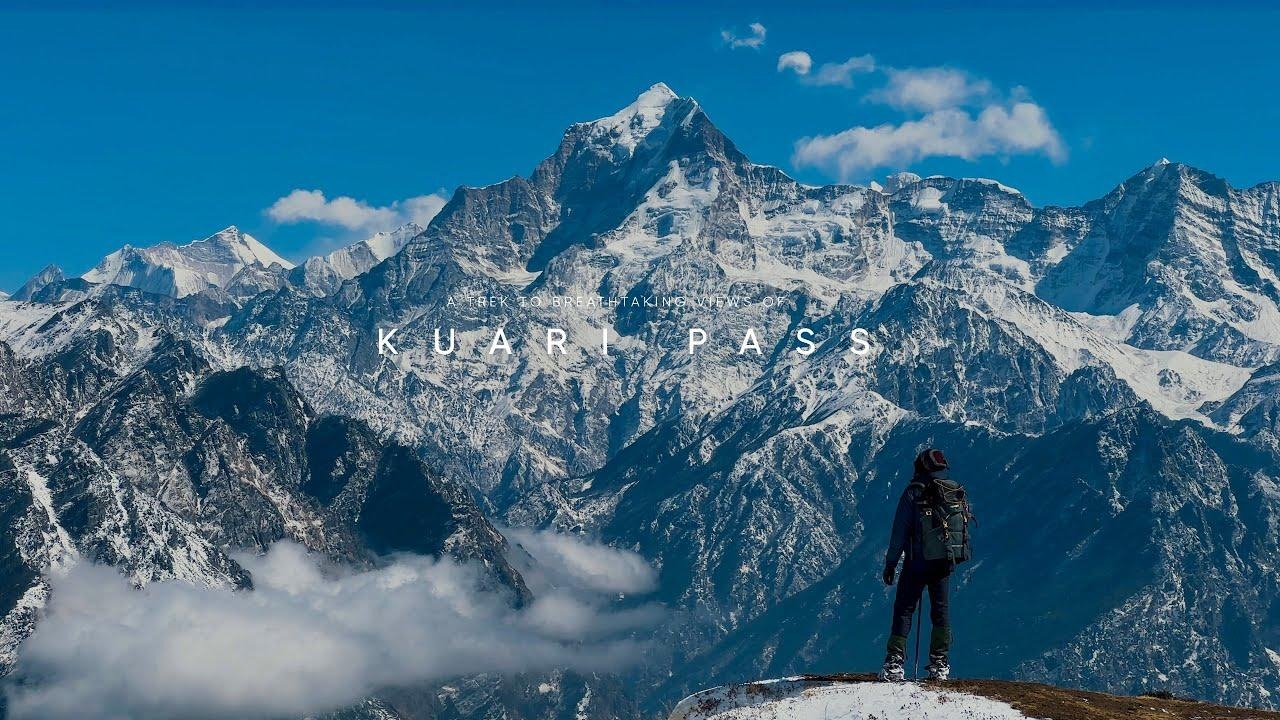
The Indian Himalayas are not a single entity; they are a thousand different worlds stacked on top of each other. From dense, snow-crusted pine forests to high-altitude deserts and meadows bursting with endemic flowers, the range offers a trek for every soul. Here is a deep dive into five legendary trails: Kedarkantha, Kuari Pass, Hampta Pass, Valley of Flowers, and Sandakphu Phalut.
Kedarkantha Trek: The Winter Fairy Tale
If you have ever dreamed of a white Christmas in the mountains, the Kedarkantha trek is your answer. Located in Uttarakhand’s Govind Pashu Vihar National Park, this 12,500-foot summit is widely considered the best winter trek in India. The journey begins from the quaint village of Sankri and winds through dense forests of pine and oak, where the snow often sits knee-deep by December.
What sets Kedarkantha apart is its accessibility. It is a non-technical summit, meaning first-time trekkers can reach the top with basic fitness and determination. The final ascent is a steep, exhilarating pre-dawn climb. The reward? A 360-degree panorama of over a dozen Himalayan peaks—Swargarohini, Bandarpoonch, and Black Peak—bathed in the first light of sunrise. Beyond the summit, the trek offers frozen lakes like Juda Ka Talab and camping under skies so clear the Milky Way feels within arm’s reach.
Kuari Pass Trek: The Lord Curzon Trail
For those who prefer grandeur without punishing steep climbs, the Kuari Pass trek is a masterpiece. Known historically as the “Curzon Trail” (after Lord Curzon, who traversed it in 1905), this route in the Garhwal Himalayas is an open-air gallery of giants. At 12,516 feet, the pass itself is modest, but the views are anything but.
Standing at Kuari Pass, you are face-to-face with Nanda Devi (India’s second-highest peak), Kamet, Dronagiri, and Hathi Ghoda. The trail meanders through charming oak and rhododendron forests before opening into vast, rolling meadows known locally as bugyals. Unlike many treks where you are constantly looking up, Kuari Pass allows you to walk alongside the giants. It is one of the best treks for learning basic mountaineering skills (crampons, ice axes) in winter, yet equally stunning in summer when the meadows explode with wildflowers.
Hampta Pass Trek: Crossing Worlds
The Hampta Pass trek is a geological magic trick. Starting from the lush, subtropical forests of Manali’s Kullu Valley, you climb steadily toward the 14,100-foot pass. The ascent is a thrilling mix of river crossings, boulder fields, and sheer switchbacks. But the real magic happens at the top. Crossing Hampta Pass feels like walking through a wardrobe.
On one side, you leave behind verdant greenery, pine trees, and flowing streams. On the other, you descend into the stark, arid, almost lunar landscape of the Spiti Valley. The contrast is jarring and beautiful. The trek concludes with a visit to Chandratal Lake, the “Moon Lake,” whose reflective waters sit under the shadow of jagged peaks. This trek is for the adventurer who craves diversity: It offers forest, snow, desert, and a high-altitude lake in just five to six days.
Valley of Flowers Trek: A UNESCO Masterpiece
Some treks are about the destination; the Valley of Flowers trek is about the micro-details. A UNESCO World Heritage Site, this Uttarakhand trek is less a physical challenge and more a pilgrimage for nature lovers. The trek base is the steep 10-kilometer climb from Govindghat to Ghangaria. While the legs burn, the mind soars.
Once inside the valley floor, you step into a botanical fantasy. From July to September, over 500 species of wildflowers carpet the land in an explosion of color—cobra lilies, blue poppies, and the elusive brahma kamal. The valley is flanked by the massive Rataban Peak, and the Pushpawati River cuts through the middle. It is a gentle, wanderer’s trek, ideal for photographers and botany enthusiasts who want to slow down and breathe the purest air on earth.
Sandakphu Phalut Trek: The Sleeping Buddha
Finally, we travel to the Singalila Ridge in West Bengal. The Sandakphu Phalut trek is the holy grail for peak viewers. At 11,930 feet, Sandakphu is the highest point in West Bengal, but its real claim to fame is the view. From this ridge, you can see four of the world’s five highest peaks in one sweeping glance: Everest, Kanchenjunga, Lhotse, and Makalu. Locals call the formation the “Sleeping Buddha” because the outline of Kanchenjunga resembles a reclining figure.
The trek is unique because it is often done via shared jeeps to Sandakphu, followed by a long, undulating walk to Phalut. The trails wind through forests of magnolia, rhododendron, and bamboo, with chances to spot the elusive red panda. The sunrises here, where the light hits Everest and Kanchenjunga sequentially, are legendary.
Final Verdict
- Best for Snow & Solo Beginners: Kedarkantha
- Best for Panoramic Views: Kuari Pass
- Best for Landscape Diversity: Hampta Pass
- Best for Nature & Photography: Valley of Flowers
- Best for Peak Sightseeing: Sandakphu Phalut
Whichever you choose, these five trails promise not just a trek, but a transformation. The Himalayas are waiting.





+ There are no comments
Add yours